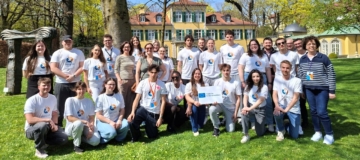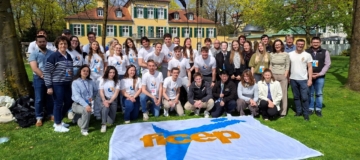
The first FICEP Youth Congress took place in Brno from April 5 to 7, 2024, under the motto “Game Changers” for the future. The aim of this congress was to create a platform for young volunteers to network, share their ideas and strengthen their skills and knowledge through various workshops, both personally and professionally.
A total of 31 participants from five different nations and associations gathered in Brno, including CSR (Romania), DJK (Germany), FSCF (France), OREL (Czech Republic) and SPORTUNION (Austria).
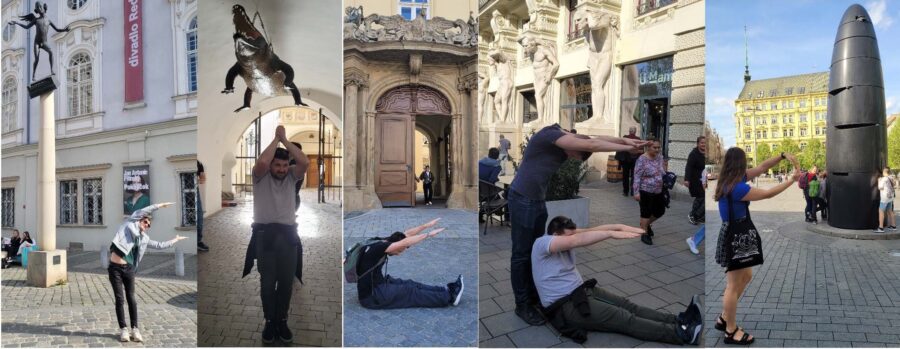
In addition to the official program and workshops, the leisure activities offered something for everyone – from a museum visit to a puzzle rally with a photo challenge to a fun evening of bowling.
“The congress was really cool,” says Sarah Bachkönig, participant from Austria. “We made new contacts and discussed current topics relating to FICEP camps and games.”
The aim of the congress was to …
… to promote the networking of young volunteers, to contribute ideas and suggestions and to strengthen soft skills and knowledge through the workshops, which supports both personal and professional development. “Especially for the future, there are new suggestions that could be implemented” (Bachkönig).
Game Changers & Lead with Impact
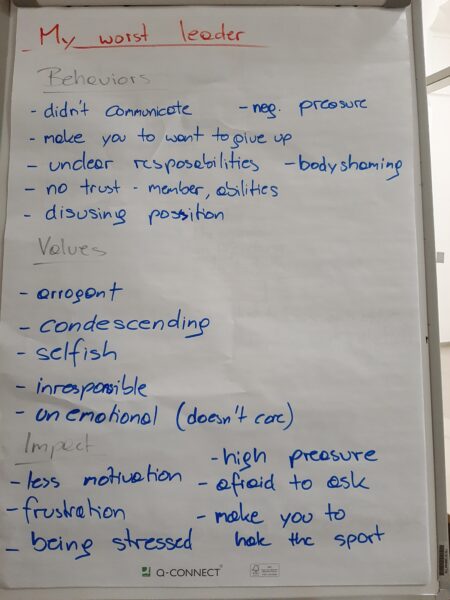
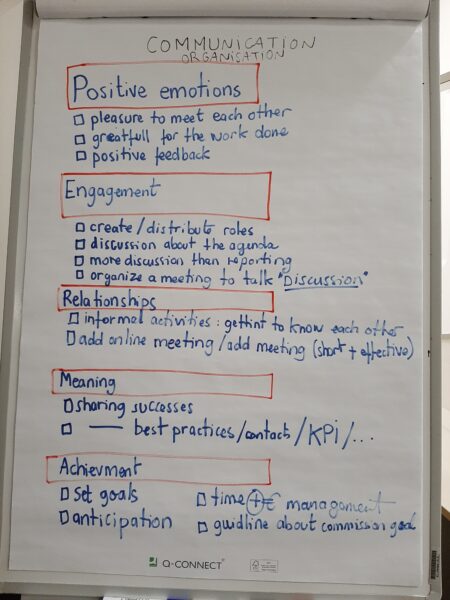
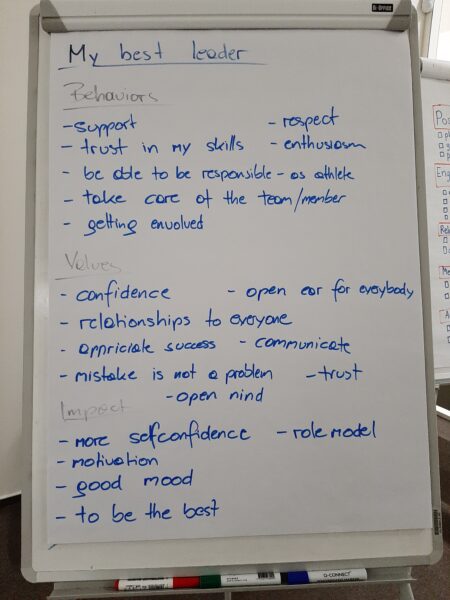
The speakers at the congress covered topics such as sustainability in sport, leadership with influence and communication skills. On Saturday, Valentina Doupona from SPORTUNION Salzburg spoke on the topic of sustainability in sport with the title “Game Changers: Empowering Youth Sports with Sustainability Practices”. Here, young volunteers had the opportunity to contribute their ideas and input on the three pillars of sustainability in a World Café- The World Café was led by the members of the executive committee Stefani Groß, Jonathan Collomb and Stefan Grubhofer. On Sunday, the program included Christoph Ungerböck with his presentation “Lead with Impact: Empowering Change” and Tomas Mehlmauer with the topic “Performance on stage: Communication Skills”.
Stage presence, body language & co
One focus was on workshops on communication skills. “An important message of these workshops was not only to do things right, but also to do the right things,” says Stefan Grubhofer. In addition, practical approaches and methods for discovering individual strengths and overcoming challenges were taught in order to initiate positive change. “On the whole, the FICEP Youth Congress was about enabling young volunteers to network, contribute their ideas and suggestions and strengthen their soft skills and knowledge through the workshops.”
Milestone in history
“The first FICEP Youth Congress was a milestone in our federation’s history,” explains executive member Jonathan Collomb. “For the first time, we brought together young people from different backgrounds, all driven by a passion for sharing and the desire to work together. It was great to see that exchanges were able to continue outside working hours: a real emulsion was created. Better than exchanges, working sessions between the young people and the executive committee are already being planned.”